01
Connect engineering data sources
MOVEcenter ingests telemetry, test logs, standards, notes, reports, and other context your team already uses.
MOVEcenter helps technical teams connect fragmented test data, analyze it with engineering context, and return outputs that reduce time-to-understanding across real hardware workflows.
MOVEcenter workspace
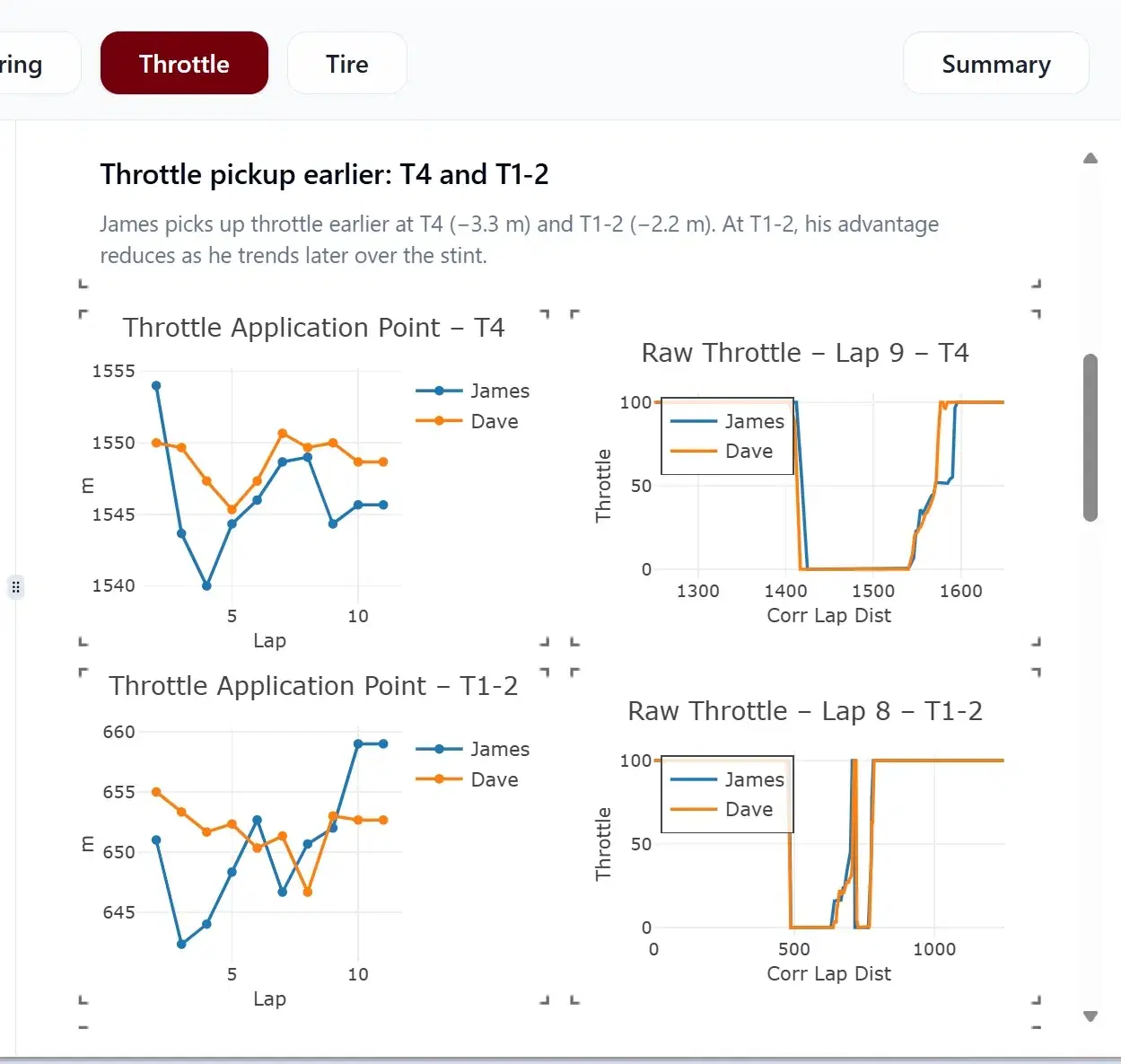
Inputs connected
Telemetry, logs, documents, and historical context mapped into one review surface.
Outputs returned
Session summaries, comparisons, and ranked anomalies delivered faster.
A workflow built to reduce engineering latency without removing the engineer.
MOVEcenter ingests telemetry, test logs, standards, notes, reports, and other context your team already uses.
Agents search across sources, find deviations, compare runs, and identify the patterns that matter under real time pressure.
Get session summaries, anomaly reports, comparisons, and next-step guidance that speed up technical review.
Core capabilities
MOVEcenter is designed for teams working with technical data that is fragmented, high-volume, and costly to interpret slowly.
Go beyond isolated charts or single documents. MOVEcenter works across multiple technical inputs in one workflow.
Ask questions in plain language and retrieve grounded answers with traceability back to the relevant evidence.
Compare sessions, detect unexpected behaviors, and identify changes worth review faster than manual analysis.
Keep engineers in control while reducing the time they spend gathering context and assembling reports.
Security and deployment
Enterprise teams need more than a fast demo. They need a credible path to deployment, data handling controls, and clear operational trust.
Customer-controlled adoption
Position MOVEcenter for enterprise deployment models and technical review requirements.
High-trust engineering workflows
Support teams working with valuable internal IP, test results, and operational context.
We'll walk through your data sources, your review bottlenecks, and where MOVEcenter can remove engineering latency first.